
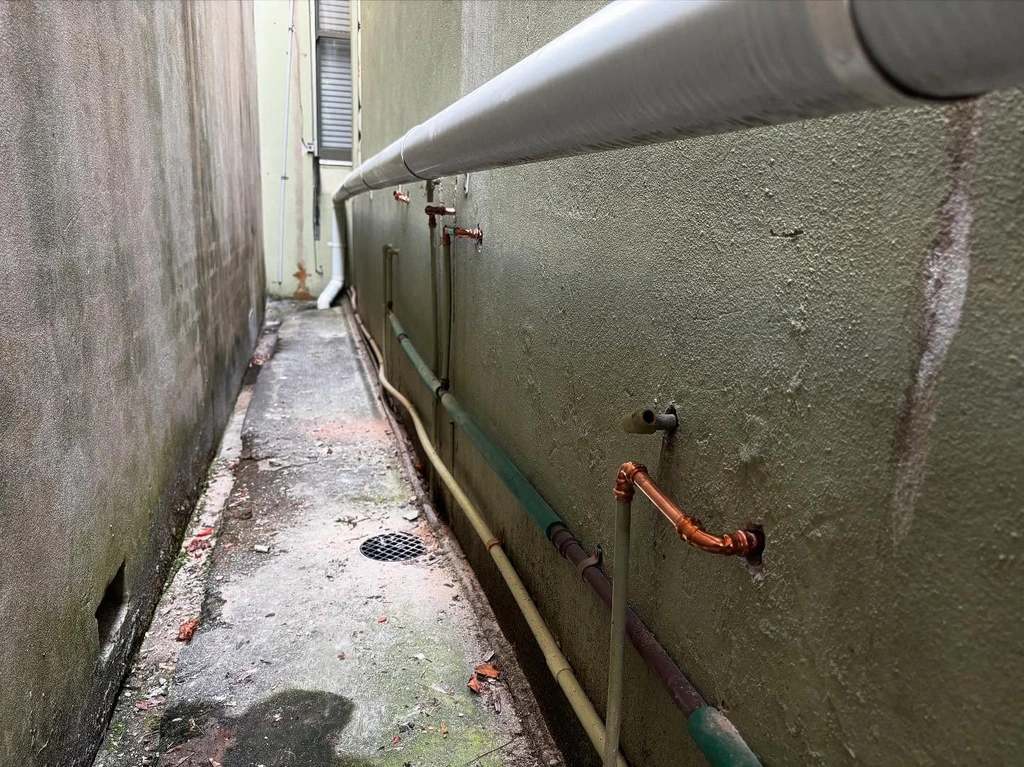
If your water bill has jumped for no obvious reason, or you’ve noticed a damp patch on the wall that won’t go away, you probably need leak detection – and the sooner you act, the less it’ll cost you. Hidden leaks rarely announce themselves with a dramatic burst pipe. More often, they show up as small, easy-to-dismiss clues that quietly get worse while you’re not looking.
We’ve walked into more than a few Hills District homes where a “small drip” turned out to be a slab leak that had been running for months. A same-day leak detection inspection can usually confirm the problem before it escalates. In the meantime, here’s exactly what to look and listen for.
Why Hidden Leaks Are So Easy to Miss
Most household leaks happen somewhere you can’t see – under a concrete slab, inside a wall cavity, or below the ground between your meter and your house. Unlike a burst pipe, a hidden leak doesn’t flood your kitchen overnight. It seeps slowly, which means the damage builds up gradually while the actual cause stays out of sight.
That’s exactly why leak detection matters. It’s not just about fixing a drip – it’s about finding water loss before it turns into a structural repair bill, a mould problem, or a council water-usage headache.
1. Your Water Bill Has Spiked Without Explanation
This is usually the first red flag. If your household routine hasn’t changed – same number of people, same habits – but your bill has climbed noticeably, a hidden leak is one of the most common culprits. A single running toilet or a small pipe leak can waste hundreds of litres a day without a single visible sign inside the house.
What to do: Check your water meter at night before bed, then again first thing in the morning without using any water in between. If the numbers have moved, water is escaping somewhere.
2. You Can Hear Water Running When Everything’s Off
Turn off every tap and appliance in the house, then listen. A faint hissing, trickling, or gurgling sound – especially near walls, under the floor, or close to the water meter – is a strong indicator you need water leak detection carried out professionally. Sound travels oddly through slabs and cavities, so the noise you hear isn’t always near the actual leak.
3. Damp Patches, Warping, or Mould That Keeps Coming Back
Unexplained damp patches on walls or ceilings, floorboards that have started to warp or lift, or mould that returns no matter how often you clean it are all signs of moisture getting in from somewhere it shouldn’t be. If there’s no obvious external cause – like a roof leak after rain – a hidden pipe leak inside a wall or under the slab is a likely explanation.
This is one of the more serious warning signs, because by the time you can see it, moisture has usually been present for a while. Left alone, it becomes a much bigger job than a straightforward pipe leak repair.
4. Warm Patches on the Floor
If part of your floor feels noticeably warmer than the rest – particularly over a concrete slab – it can point to a leaking hot water pipe underneath. This is a classic sign of a slab leak, and it’s one of the trickier ones to diagnose without the right equipment, since the pipe itself might be metres away from where you feel the warmth on the surface.
5. Low Water Pressure in One or More Fixtures
A leak between your meter and your taps means some water escapes before it reaches the fixture. If one shower or tap has noticeably weaker pressure than the rest of the house, and it’s not a blocked aerator or a shared plumbing issue, it’s worth having it checked. Sudden pressure drops across the whole house are also worth investigating – they can indicate anything from a leaking pipe to bigger issues in your general plumbing system.
6. The Sound or Sight of Water Pooling Outside
Puddles forming in the yard that aren’t tied to rain, unusually green or lush patches of grass in one specific spot, or a section of pathway that’s always slightly damp can all point to an underground pipe leak. These are easy to write off as drainage issues, but persistent unexplained wet spots deserve a proper look.
7. Your Water Meter Won’t Stop Moving
This is the most reliable DIY test available to any homeowner. With everything in the house turned off, a moving meter means water is flowing somewhere in the system – and that’s the clearest sign you need leak detection sooner rather than later.
How Professional Leak Detection Actually Works
Once you’ve spotted one or more of these warning signs, the next step is getting an accurate diagnosis – not guesswork. Professional leak detection uses acoustic listening devices, thermal imaging, and pressure testing to pinpoint exactly where water is escaping, without pulling up floors or knocking holes in walls to go looking for it.
This non-invasive approach matters because guessing wrong on a leak location can mean unnecessary demolition, delays, and cost. A proper hidden leak detection job typically involves:
- Isolating sections of the plumbing system to narrow down where the leak sits
- Using acoustic equipment to listen for the specific sound water makes escaping under pressure
- Thermal imaging to spot temperature differences caused by leaking hot water pipes
- Confirming the exact location before any repair work begins
From there, emergency leak repair can usually happen the same visit, particularly for accessible pipe leak repair jobs. More complex slab leaks might need a short-term reroute of the pipe while a permanent fix is scheduled.
What Happens If You Leave It?
Ignoring the warning signs doesn’t make the leak go away – it just means the eventual repair costs more. Left unaddressed, hidden leaks can lead to:
- Structural damage to slabs, flooring, and framing
- Mould growth that affects indoor air quality
- Significantly inflated water bills over months
- Soil erosion around foundations from underground leaks
- A much larger, more disruptive repair once the damage surfaces
Australia’s peak water body has consistently flagged household leaks as one of the most preventable sources of water waste in the home, which is exactly why catching the early signs matters – both for your wallet and for water conservation more broadly, as outlined by Sydney Water’s guidance on detecting leaks.
Leak Detection & Repair Cost: What Affects the Price
There’s no single flat rate, because the cost depends on where the leak is and how it’s accessed. Generally, the price is shaped by:
- Whether the leak is under a slab, in a wall, or underground in the yard
- How accessible the pipe is once located
- Whether it’s a hot water line (which needs insulated pipe) or a cold water line
- Whether the fix is a spot repair or a full reroute
A licensed local plumber will always confirm pricing with a free quote before any work starts, rather than charging a call-out fee just to look.
When to Call for Emergency Leak Repair
Not every leak is urgent, but some warning signs mean you shouldn’t wait for a routine appointment. Call for emergency leak repair straight away if you notice:
- Water pooling rapidly or visibly running
- A sudden, significant drop in water pressure
- Water coming through a ceiling or light fitting
- Any sign of water near electrical outlets or switchboards
For everything else – slow-building signs like a rising water bill or a faint sound near the wall – book in leak detection as soon as you can, before it becomes an emergency.
Conclusion
A hidden leak rarely stays hidden for long – a rising water bill, a damp patch that won’t dry out, a warm spot on the floor, or a faint sound behind the wall are all early warnings worth taking seriously. Catching these signs early is what separates a simple pipe repair from a slab replacement or a mould remediation job, which is why professional leak detection matters more than most homeowners realise until it’s too late.
If any of these warning signs sound familiar, don’t wait for the problem to surface on its own. Book a free quote with our team today for fast, accurate leak detection and repair across the Hills District – same-day service, no call-out fees, and a fixed price before any work begins.
